
Overview to ZnSe Optics

Zinc Selenide (ZnSe) is a substance semiconductor material that has actually emerged as an important component in modern-day optical units, specifically those functioning within the infrared (IR) scale. Its special combo of optical, thermic, and also mechanical residential properties produces it strongly suited for an unique variety of requests, coming from high-power laser device devices to vulnerable thermic image resolution devices. ZnSe is actually commonly recognized for its broad transmission home window, extending from the obvious red light by means of the far-infrared, which is a crucial differentiator reviewed to other typical IR components like Germanium or Silicon. This characteristic permits the use of obvious placement lasers, like a red HeNe laser, in devices mostly running in the infrared, simplifying system as well as servicing. The material’s implication is actually emphasized by its widespread adopting in commercial, medical, protection, as well as clinical markets, where reputable and also high-performance IR optics are crucial.
Component Properties Relevant to Optical Performance

The appropriateness of ZnSe for asking for visual treatments is actually straight linked to its inherent component homes. Knowing these features is key to developing as well as applying helpful visual systems.
Optical Feature:
Gear box Assortment: ZnSe shows a vast gear box assortment, typically cited as 0.6 μm to 21 μm, along with some resources prolonging this to 22 μm. This large home window includes numerous essential atmospherical transmission bands and also laser device wavelengths, including the popular 10.6 μm line of CO2 laser devices.
Refractive Mark: The refractive index of ZnSe is about 2.4028 at the crucial CO2 laser insight of 10.6 μm. The refractive index is actually dispersive, varying with wavelength; for example, it is actually greater at much shorter wavelengths (e.g., 2.6754 at 0.54 μm) as well as minimizes towards longer wavelengths (e.g., 2.3333 at 17.8 μm).
Refractive Index Temp Coefficient (dn/dT): A vital factor for high-power applications is the modification in refractive mark along with temperature level. For ZnSe, the dn/dT declares, about +61 x 10 ⁻⁶/ ° C at 10.6 μm and 298K. This favorable coefficient indicates that as the temperature of a ZnSe lense increases, its own refractive mark also boosts, resulting in a reduce in focal length– a phenomenon main to thermic lensing.
Refractive Mark Insight Coefficient (dn/d μ): The wavelength coefficient of the refractive index, dn/d μ, is actually mentioned to be 0 at 5.5 μm.
Absorption Coefficient: Reduced absorption is actually paramount for high-power laser device optics to lessen thermal filling. ZnSe displays reduced absorption coefficients throughout its own gear box variety, particularly at crucial insights: 0.0005 centimeters ⁻¹ at 10.6 μm, 0.0004 centimeters ⁻¹ at 5.25 μm, 0.0004 cm ⁻¹ at 3.8 μm, 0.0007 centimeters ⁻¹ at 2.7 μm, as well as 0.005 centimeters ⁻¹ at 1.3 μm.
Image Reduction: Due to its own fairly higher refractive index, image losses at uncoated ZnSe areas may be significant. For pair of surface areas, the image reduction is actually approximately 29.1% at 10.6 μm. This warrants making use of anti-reflection (AR) finishings to maximize gear box.
Reststrahlen Peak: The Reststrahlen peak, a location of higher reflectivity due to latticework absorption, happens at 45.7 μm for ZnSe. This determines the long-wavelength limitation of its helpful transmission array.
| Property | Value at 10.6 μm | Significance for Applications |
|---|---|---|
| Refractive Index (n) | 2.4028 | Determines lens focal length and reflection losses |
| dn/dT | +61 × 10⁻⁶ /°C | Causes thermal lensing in high-power systems |
| Absorption Coefficient | 0.0005 cm⁻¹ | Critical for minimizing heat generation |
| Thermal Conductivity | 18 W·m⁻¹·K⁻¹ | Governs heat dissipation speed |
| Thermal Expansion | 7.57 × 10⁻⁶ /°C | Contributes to focal shift under thermal load |
| Knoop Hardness | 120 (500g) | Indicates susceptibility to scratching |
Thermic Homes:
Thermal Conductivity: ZnSe has a thermic conductivity of 18 W m ⁻¹ K ⁻¹ at 298 K (equal to 0.18 W/cm/ ° C). While not as high as products like CVD Diamond, this feature is actually important for frittering away heat energy created by residual absorption, aiding to relieve thermic lensing results.
Thermal Expansion: The thermic straight development coefficient is actually 7.1 x 10 ⁻⁶/ K at 273 K, or 7.57 x 10 ⁻⁶/ ° C at twenty ° C. Thermal expansion supports improvements in lens design as well as focal duration under thermic payload.
Particular Warmth Ability: The certain warmth capability is actually 339 J Kilograms ⁻¹ K ⁻¹ or even 0.356 J/g/ ° C. This home determines how quickly the product warms when absorbing laser device electricity.
Liquefying Aspect: ZnSe possesses a pretty higher melting point of 1525 ° C. Nonetheless, sensible operating temps are restricted by other factors.
Thermic Limitations: ZnSe oxidizes significantly at 300 ° C, goes through plastic contortion around five hundred ° C, as well as disjoints near 700 ° C. It is actually normally encouraged not to use ZnSe home windows over 250 ° C in a normal atmosphere.
Technical Homes:
Thickness: The quality of ZnSe is 5.27 g/cc. This is a factor for weight-sensitive treatments.
Solidities: ZnSe is actually a reasonably delicate component with a Knoop firmness of 120 (making use of a 500g indenter). This creates it susceptible to scraping, calling for mindful dealing with.
Elastic Moduli: Youthful’s Modulus (E) is actually 67.2 GPa, Shear Modulus (G) is actually 40 GPa, as well as Bulk Modulus (K) is 40 Grade point average. These moduli define the material’s tightness as well as resistance to deformation under worry.
Poisson Proportion: Poisson’s proportion is 0.28.
Apparent Elastic Limit: The apparent elastic restriction is actually 55.1 MPa (8000 psi). This signifies the worry fix which the material starts to exhibit non-linear contortion.
Solubility: ZnSe has extremely low solubility in water (0.001 g/100g water), which is valuable in moist environments.
Crystal Design and Product Level:.
ZnSe generally has an FCC Cubic, F43m (# 216), Zinc Blende structure as well as is commonly created as a polycrystalline product.
Single crystal ZnSe is accessible however much less popular. It has been actually stated to display reduced absorption and also is considered more effective for CO2 optics in some cases.
Product homes may differ based on the manufacturing procedure (CVD vs. PVD vs. Hot Pushing vs. Liquefy Development) and also the management of grain dimension and also contaminations. Higher purity and composed grain dimension are actually crucial for ideal optical performance and also technical stamina.
Important Functionality Characteristics and Analysis
Past innate material properties, the efficiency of a completed ZnSe optical element is actually specified through several vital attributes, analyzed with standardized screening.
Gear box and Absorption:
Higher transmission and also low absorption are actually very important, particularly for high-power laser device treatments. Absorption results in heating, which can cause thermal lensing and possibly destroy the optic. The absorption coefficient at the operating wavelength is a crucial metric. Assessment usually includes spectrophotometry to gauge transmission around the wanted spooky selection as well as calorimetry to gauge absorption at details laser wavelengths.
Refractive Index Agreement:
Variations in refractive mark within the component can easily bring about wavefront misinterpretation, degrading beam of light premium and focusability. Premium ZnSe material, especially that made by controlled CVD methods, shows exceptional homogeneity. Interferometry is a typical approach for assessing refractive index agreement by gauging the carried wavefront inaccuracy.
Laser-Induced Damage Threshold (LDT):
The Laser-Induced Damages Threshold (LDT), likewise known as LIDT, is an important specification for optics used in high-power laser systems. It stands for the optimum laser radiation intensity or fluence an optic can hold up against without damages.
Meaning and Criteria: The ISO standard defines LIDT as the “greatest amount of laser radiation event upon the optical element for which the extrapolated likelihood of damage is zero”. Damage is specified as any type of noticeable adjustment, also if it does not promptly break down performance.
Evaluating Techniques: LDT testing is naturally destructive. It entails subjecting the optic to increasing laser fluence up until damages is observed, often utilizing techniques like Nomarski microscopy for detection. Two key approaches are used:.
Single-Shot (1-on-1): Each site on the optic is revealed to a solitary laser pulse at a details fluence. Several websites are evaluated at differing fluences, and the damages likelihood is theorized to no.
Multi-Shot (S-on-1): Each website is exposed to’S’ variety of pulses at a certain fluence. This technique is more representative of constant laser operation.
Statistical Nature: The defined LIDT is generally an extrapolation to 0% damages chance, yet damage can still occur listed below this value. A lot more exact statistical models like Weibull and Burr distributions can much better fit LDT information.
Factors Influencing LDT: LDT is highly based on numerous factors:.
Wavelength: Damages devices differ with wavelength.
Pulse Period: For brief pulses (0.5-100 ns), LDT scales inversely with the square root of pulse size; much shorter pulses can lead to lower limits.
Beam Diameter: For bigger light beams (> 5 mm), LDT (in J/cm ² )might not scale individually of light beam diameter as a result of the boosted probability of experiencing issues.
Variety Of Picture (for pulsed lasers): Multi-shot testing usually yields reduced LDT worths than single-shot screening due to cumulative effects.
Product Quality: Pureness, incorporations, and microdefects considerably influence LDT.
Surface Area Quality and Tidiness: Dust and contamination can substantially decrease LDT. Evaluating is done on tidy optics.
Coating Kind: While AR finishings can have a negligible effect on LDT in many cases, the coating material and deposition process are important for high LDT optics.
Pulse Repetition Regularity (PRF): For high PRF light beams, both ordinary and peak power has to be thought about. Highly transparent products reveal much less LDT decline with increasing PRF.
Enhancement Techniques: Study is discovering methods to boost ZnSe LDT. One encouraging method includes surface microstructures. Pulsed laser damage tests at 2.94 μm have shown that motheye AR-microstructures engraved in ZnSe can have damages thresholds five times greater than thin-film AR-coated ZnSe.
CW Laser LDT: For continual wave (CW) lasers, LDT is normally defined in regards to maximum strength (W/cm TWO). Holo/Or records CW LDT for ZnSe > 6 kW at 10600 nm.
Running Recommendations: It is typically recommended to operate laser systems listed below 50% of the specified LIDT to offer a security margin and account for prospective variations with time and ecological elements.
| Factor | Impact on LDT | Mitigation Strategy |
|---|---|---|
| Pulse Duration | ↓ Shorter pulses reduce LDT | Optimize pulse length for application |
| Surface Contamination | ↓ Dirt/particles drastically lower LDT | Strict cleaning protocols & cleanrooms |
| Material Defects | ↓ Inclusions/microcracks reduce threshold | Use CVD-grade ZnSe with controlled grain |
| AR Coating Quality | ↑/↓ Multilayer coatings can enhance LDT | Apply motheye microstructures (5× gain) |
| Beam Diameter | ↓ Larger beams increase defect probability | Test LDT at operational beam size |
Sorts Of ZnSe Optical Components and System Layout

ZnSe is produced right into numerous optical components, each serving details functions within an optical system. Creating with ZnSe calls for careful factor to consider of its properties and the designated application.
Common ZnSe Optical Aspects:
Lenses: Used to focus or collimate light.
Lens Lenses: Generally used in CO2 laser systems to accomplish smaller spot sizes, reduce spherical aberration, and reduce beam of light waste in cutting or noting applications.
Aspheric Lenses: Deal remarkable aberration improvement contrasted to round lenses, especially for concentrating or collimating light without presenting spherical aberration. ZnSe aspheres work in the mid-IR variety (3-5 µm and 7-12 µm). They are normally produced utilizing ruby turning. As a result of ZnSe’s high refractive index, aspheres can be designed with shorter focal lengths and reduced dispersion than those made from products like CaF TWO. For finest collimation, the plano surface ought to encounter the laser or point source.
Windows: Made use of as protective aspects or to divide environments while enabling optical transmission. They prevail in FLIR and thermal imaging systems.
Prisms: Made use of to spread or redirect light. ZnSe is utilized for ATR (Undermined Complete Reflectance) prisms in spectroscopy.
Beamsplitters: Utilized to divide a beam into 2 or more light beams.
System Design Considerations:
Thermal Lensing: As gone over in Section 2, thermal lensing is a significant difficulty in high-power laser systems utilizing ZnSe. Heating causes thermal growth and an increase in refractive index, causing a much shorter focal size. The degree of thermal lensing depends on laser power, responsibility cycle, and lens tidiness.
Mitigation Techniques: .
Using ZnSe with reduced absorption minimizes the heat load.
Passive payment techniques and multi-stage designs utilizing products with opposing dn/dT worths (e.g., incorporating ZnSe with fluoride glasses like CaF TWO, BaF ₂, or LiF ₂, which have adverse dn/dT) can lessen thermally induced wavefront aberrations. This permits passive adjustment of both first-order and higher-order thermal aberrations in sub-kW laser systems.
Athermalization strategies involving mindful product choice and optical design can considerably alleviate thermal lensing.
Aberration Control: Round aberration is a key concern with solitary round lenses, protecting against diffraction-limited performance in monochromatic applications. Aspheric lenses are especially developed to correct this.
Anti-Reflection (AR) Coatings: Necessary for lessening representation losses at the air-ZnSe interface and taking full advantage of transmission. AR coatings are tailored for particular wavelength arrays, such as 10.6 µm for carbon dioxide lasers or broadband AR (BBAR) for thermal imaging systems operating over wider spectral ranges (e.g., 3-5 µm or 7-12 µm). BBAR coatings minimize representation back right into the system, making best use of transmission.
Placing: Appropriate mounting is critical to avoid emphasizing the fairly soft ZnSe product, which can cause birefringence or mechanical damages. Precision places, such as XY translation places, are used for precise placement.
Taking care of Precautions: ZnSe is a harmful material and relatively soft, damaging easily. Rubber or plastic handwear covers need to be put on during handling to avoid contamination and damages.
Speculative Style Factors To Consider:
Flexible Optics: For very high-power or dynamic applications where thermal lensing is significant and difficult to totally compensate passively, integrating flexible optical aspects (e.g., deformable mirrors) right into a ZnSe system might actively fix for real-time wavefront distortions triggered by thermal effects. This would certainly include complexity and expense but can allow higher efficiency levels.
Integrated Cooling Channels: While challenging to apply with weak materials like ZnSe, checking out microfluidic air conditioning networks directly within or quickly adjacent to high-power ZnSe optics can give very local and efficient warmth removal, even more alleviating thermal lensing. This would need substantial improvements in fabrication methods.
Production as well as Manufacture Processes

The manufacturing of high-quality ZnSe optics entails advanced crystal growth techniques observed by accurate nutrition, buffing, and also coating procedures. The manufacturing technique substantially determines the material’s homes as well as appropriateness for different treatments.
Crystal Growth Techniques:
Chemical Water Vapor Deposition (CVD): This is actually one of the most largely made use of strategy for producing optical-grade ZnSe. It entails reacting zinc water vapor along with hydrogen selenide fuel in a measured atmosphere, generally at temperatures around 650– 750 ° C. ZnSe is deposited as a polycrystalline level onto a substratum, frequently graphite. Hydrogen and also provider gasolines are actually regularly pumped out. CVD-produced ZnSe is actually understood for its own significant chemical purity and reduced flaw quality because of the pretty reduced development temp as well as purification during the method. The grain measurements is actually regulated, generally 30– fifty µm, to improve strength. According to one resource from 2020, CVD ZnSe was actually exclusively produced in the U.S.A..
Bodily Water Vapor Deposition (PVD): PVD involves reprocessing ZnSe scraps by evaporation and recombination in to a strong. While PVD ZnSe has some efficient documents, it is actually generally thought about unfit for demanding CO2 laser device optics. Regardless of this, PVD kept a prevalent setting in the international Zinc Selenide crystal market in 2023, accounting for over 45% of income, attributed to its capability to create large-sized crystals with higher crystalline top quality.
Hot Pressing of Powder: This procedure entails consolidating ZnSe grain under high temperature and also tension.
Melt Growth: Growing crystals directly from molten ZnSe.
The choice of growth method influences material residential properties like impurity composition, introductions, and microdefect property. CVD is usually preferred over high-temperature particle pushing and sublimation-condensation development for far better purity and also crystallinity.
Forming and also Polishing:
Once the mass ZnSe material is developed, it is formed in to the wanted visual component (lense, home window, prism, etc) making use of procedures like grinding and precious stone rotating. Diamond switching is particularly vital for generating the exact shapes of aspheric lenses. The surfaces are actually at that point buffed to accomplish the needed visual surface area quality as well as design spec. Exclusive methods are commonly worked with by makers to maximize these guidelines.
Optical Coatings:
Administering visual finishes is actually an essential last measure to enrich efficiency.
Anti-Reflection (AR) Coatings: These are necessary to reduce representation losses at the surfaces of ZnSe optics, which could be notable because of the component’s refractive index. AR finishes are made for particular insights or broadband arrays.
Multilayer AR Coatings: Existing investigation pays attention to multilayer ARCs to achieve far better refractive index matching and also wider transmission capacities. However, simply piling coatings may lead to anxiety superposition as well as coat failure.
Incline Refractive Mark (SMILE) Constructs: GRIN structures may dramatically improve adhesion and permeability performance through properly doing away with user interfaces.
High-Low-High-Low (HLHL) Frameworks: HLHL constructs can easily obtain considerable antireflection effectiveness along with less coatings, as well as selecting products along with opposing tension residential or commercial properties aids take care of stress and anxiety. However, these designs require much more advanced prep work techniques.
Double Function Coatings: Mixing AR functions with surface passivation is a region of research, specifically for components like silicon where SiO ₂ layers may serve each reasons.
Textured Coatings: Distinctive dielectric finishes can strengthen present and also spooky action in solar cells through boosting visual prison. This approach may be much less pricey than texturing the substrate itself.
Protective Coatings: Because of ZnSe’s family member softness and also toxicity, preventive coverings might be actually used, although the primary procedure for secure managing is actually making use of handwear covers.
Other Coatings: Metallic layers (light weight aluminum, silver, gold), bandpass filters, and dielectric finishings can easily likewise be used depending upon the use.
Speculative Production Innovations:
Additive Manufacturing: While presently challenging for top quality optical components like ZnSe, future improvements in additive manufacturing strategies could likely allow the straight manufacture of complex ZnSe visual components with combined functions, reducing component waste and making it possible for novel designs.
In-situ Tracking as well as Command: Implementing advanced in-situ surveillance and real-time reviews control throughout crystal growth and also sprucing up could even further strengthen material consistency, lower defects, as well as boost surface area premium past present capacities.
Major Uses and Market Make Use Of Instances
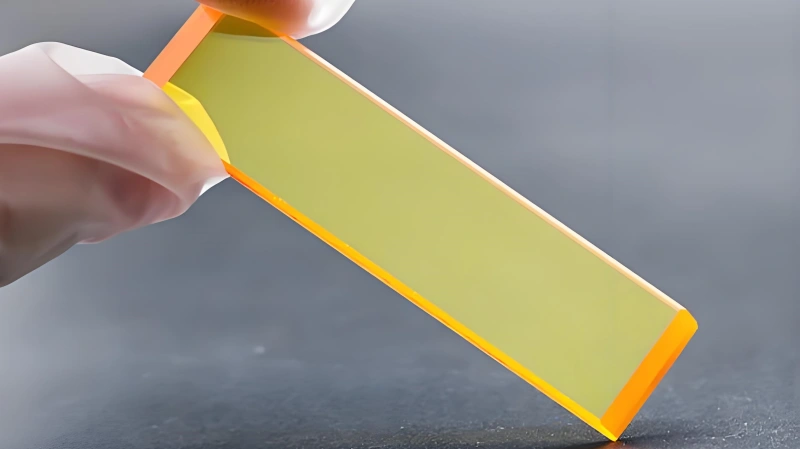
ZnSe optics are actually indispensable in a wide array of fields and also uses, largely leveraging its own clarity in the infrared spectrum as well as its appropriateness for high-power laser atmospheres.
Major Treatment Regions:
CO2 Laser Solutions: ZnSe is the material of choice for optics in CO2 laser devices working at 10.6 μm. These lasers are actually largely made use of in commercial product processing, consisting of reducing, welding, engraving, as well as denoting of steels, plastics, textiles, and composites. ZnSe lens, windows, as well as exemplifies are actually essential elements in these systems, needing low absorption and higher laser damages limit. The predisposed transparency of ZnSe in the apparent sphere is actually a notable benefit, enabling simple positioning of the IR laser device beam using an apparent reddish HeNe laser device.
Thermal Imaging: ZnSe is thoroughly utilized in thermal image resolution systems, featuring Positive Infrared (FLIR) systems. ZnSe home windows as well as lenses are actually used in requests like night eyesight, safety as well as security, search as well as saving, and also medical diagnostics. Broadband AR finishings are usually applied to make the most of gear box all over the appropriate thermal imaging bands (e.g., 3-5 µm and also 8-12 µm).
Infrared Spectroscopy: ZnSe is actually made use of in IR spectrometers, particularly as home windows and also ATR (Attenuated Complete Reflectance) prisms. Its own wide gear box variety allows the study of a number of components in the mid- as well as far-infrared.
Certain Use Cases as well as Efficiency Requirements:
High-Power Laser Optics: Needs remarkably low absorption coefficients, higher thermic energy, as well as high laser device damage limit to tolerate extreme laser device radiation without damage or notable thermic lensing.
Protective Windows: Utilized in extreme environments to shield delicate detectors or internal optics from dust, humidity, or even chemical impurities while preserving visual transmission. Demands toughness and appropriate environmental layers.
Medical Diagnostics: Made use of in several clinical laser units as well as imaging tools. Needs higher pureness and regular optical residential properties.
Aerospace and also Self Defense: Worked with in advanced laser device systems and thermic image resolution for targeting, monitoring, and countermeasures. Requires robust functionality under daunting ecological conditions and also commonly based on rigid requirements and also laws like ITAR.
Industrial Computerization: Integrated right into laser-based automation units for production, quality control, and also inspection. Calls for reliability and resilience in commercial settings.
Specific Niche as well as Developing Applications:
Tunable Mid-IR Laser Devices: ZnSe may be doped with switch steel ions like Cr ² ⁺ or even Fe two ⁺ to generate gain media for tunable laser devices functioning in the 2– 5 µm variation.
Scintillators: ZnSe crystals are actually used as scintillators in clinical image resolution applications like CT and also mammography, transforming X-rays into apparent illumination.
Optical Interaction: ZnSe’s low absorption reduction and also high openness make it ideal for visual communication technologies like insight division multiplexing (WDM).
Optoelectronics: Growing demand for optoelectronic devices like laser device diodes and also photodetectors steers using ZnSe because of its own visual qualities.
Thin-Film Treatments: ZnSe’s ability to form premium crystalline levels produces it appropriate for thin-film requests in digital gadgets.
Assimilation Challenges:
Incorporating ZnSe optics right into systems calls for cautious consideration of:.
Thermic Management: Creating systems to fritter away warmth successfully and also alleviate thermal lensing, especially in high-power applications.
Mechanical Tension: Making sure installs and properties perform not cause stress and anxiety on the pretty fragile ZnSe components.
Environmental Protection: Shielding the soft and potentially dangerous ZnSe surface areas from scratching, moisture, and chemical substance visibility by means of suitable managing and coverings.
Alignment: Taking advantage of ZnSe’s obvious clarity or even using various other positioning help for correct system setup.
Affordable Yard in Applications:
While ZnSe is leading for 10.6 µm CO2 laser devices, other products contend in different IR spooky variations or even for certain performance needs. Germanium (Ge) is typically favored for thermal imaging in the 8-12 µm assortment because of its high refractive mark and also transmission during that band. Silicon (Si) is common in near-IR applications. CVD Precious stone delivers premium firmness, thermal energy, and LDT for very high-power or even extreme settings. Chalcogenide glasses deliver extensive IR transmission and moldability but may lack the hardness as well as thermic security of crystalline products. Crossbreed visual systems incorporating various materials can easily enhance efficiency across wide spooky varieties.
Market Review and Future Expectation
The ZnSe optics market is a vibrant market steered by technological innovations as well as enhancing need across different markets.
Market Size and Projections:
The international market for ZnSe visual parts was actually valued at USD 400.7 million in 2025 and is actually projected to reach USD 662 thousand through 2032, showing a Substance Yearly Development Cost (CAGR) of 7.4% during this duration.
Focusing especially on the uncooked component, the international Zinc Selenide material market was actually valued at USD 0.19 billion in 2024 and is actually anticipated to grow to USD 0.26 billion by 2033, along with a CAGR of 3.7%.
The international market for ZnSe lenses alone was estimated at roughly $150 thousand in 2025, along with a forecasted CAGR of around 8% from 2025 to 2033.
These shapes show a well-balanced growth trajectory for the ZnSe optics market, driven by broadening uses.
Secret Market Drivers:
Improved Fostering of Laser Technology: The prevalent use laser devices in medical diagnostics, component processing (laser device machining), as well as thermic imaging is a main driver.
Development in Aerospace as well as Protection: Developing dependence on state-of-the-art laser device units in these industries enhances demand for top notch ZnSe parts.
Growth in Industrial Automation: The integration of laser-based modern technologies in automated production processes broadens the treatment foundation.
Innovations in Infrared Modern Technology: Progress in thermal imaging, fuel picking up, as well as IR spectroscopy makes new chances for ZnSe optics.
Technological Improvements in Production: Enriched precision, sturdiness, and also efficiency of ZnSe optics due to producing innovations support industry growth.
Top-notch Material Residences: ZnSe’s superb gear box in the mid-IR, mechanical strength, environmental resistance, as well as viability for several laser device insights gas market expansion.
Authorities Investments: Investments in self defense and also safety and security travel need for high-performance ZnSe optics.
Market Restraints and Problems:
High Product Price: The price of high-purity ZnSe material remains a notable restriction.
Source Establishment Disruptions: Activities like the COVID-19 pandemic have highlighted the susceptibility of international supply establishments, influencing market growth.
Selenium Availability: The limited availability of selenium, a vital component of ZnSe, can likely restrain market growth.
Surface area Damage: The ability for area damages, particularly under high-power laser operation, is actually a specialized obstacle.
Tariffs: The implementation of new tariffs on visual parts can easily offer added expense stress and also influence market aspects.
Regional Aspects:
The United States And Canada and Europe: These locations show sturdy requirement as a result of enhanced R&D abilities as well as very early adoption of sophisticated innovations. They control the ZnSe lens market because of a robust technological base and also substantial R&D expenditures.
Asia-Pacific: This region is actually experiencing swift growth, steered by increasing automation and also considerable assets in laser device machining and also visual body development, specifically in China.
Supply Chain and also Production Trends:
Regional Production Hubs: There is actually a style towards creating local manufacturing centers to resolve regional demand a lot more properly and also mitigate risks connected with lengthy global source establishments.
Collaborations and also Relationships: Increased partnership among suppliers helps improve circulation and boost market grasp.
Pay attention to Precision as well as Durability: Manufacturing developments are actually focused on enriching the precision and also toughness of ZnSe components.
Flexible Supply Methods: Providers are using even more pliable supply methods to maintain a competitive edge.
Residential Capacity Growth: Bring in duties are inducing the growth of residential manufacturing ability in vital areas to bypass cross-border levies.
Long-Term Agreements and Near-Shoring: Customers are actually more and more looking for lasting agreements and also exploring near-shoring possibilities to decrease supply volatility.
Competitive Landscape:
The ZnSe optics market is affordable, along with a mix of recognized international gamers as well as surfacing providers. Competition travels advancement and the development of even more economical as well as dependable items. Key players stated feature Thorlabs, Crystran, Edmund Optics as well as Chineselens Optics.
| Material | Transmission Range (μm) | Key Advantages | Limitations vs. ZnSe |
|---|---|---|---|
| ZnSe | 0.6–21 | Broadband transmission, visible alignment | Soft, moderate thermal conductivity |
| Germanium | 2–16 | High n=4.0, excellent 8–12μm imaging | Opaque in visible, high cost |
| Silicon | 1.2–7 | Low cost, high thermal conductivity | Limited to NIR/MWIR, brittle |
| CVD Diamond | 0.2–100+ | Extreme LDT & thermal conductivity | Very high cost, difficult to machine |
| Chalcogenide | 1–16 | Moldable, low dispersion | Lower LDT, thermal instability |
Technical Patterns:
Improved Thermal Reliability: Recurring research study pays attention to improving the thermal stability and also reducing the absorption of ZnSe elements for high-power laser device applications.
Precision Optics: The increasing demand for high-precision optics in demanding documents like aerospace and self defense travels advancements in assembly and also assessment.
Thin-Film Applications: Analysis carries on in to making use of ZnSe’s homes for thin-film applications in electronic tools.
Area Top Quality Improvements: Developments in deposition and polishing techniques are boosting surface quality and also lowering wavefront misinterpretation.
Advanced AR Coatings and Area Passivation: Research study in to multilayer AR coatings, GRIN designs, as well as surface passivation methods (possibly utilizing ZnSe itself as a passivation coating, as checked out for laser diodes) aims to improve transmission, lessen reflection, and also enhance toughness and also LDT.
Regulatory and also Economic Aspects:
Regulative Criteria: Adherence to strict governing specifications drives producers to provide higher-quality components along with regular efficiency.
Toll Impact: Tariffs on completed ZnSe windows have affected income margins for some firms.
Future Expectation:
The future of ZnSe optics seems encouraging, steered through continuing development in crucial use locations like laser handling, thermic image resolution, as well as self defense. While problems associated with product cost, supply establishment strength, and also competitors coming from substitute components exist, recurring study into innovative production approaches, strengthened material buildings (e.g., lesser absorption, higher LDT), as well as novel covering methods is actually assumed to maintain its own importance. The possibility for ZnSe in arising industries like health care imaging, optical communication, and optoelectronics also provides considerable growth options. The market place is probably to observe ongoing loan consolidation among producers as well as increased concentrate on local source chains to enrich resilience.
Risky Future Fads:
Assimilation along with AI for Manufacturing: Making use of AI as well as machine learning to optimize crystal growth specifications, refining procedures, as well as finishing deposition could possibly lead to unparalleled amounts of material quality, consistency, and also return.
Development of ZnSe-based Metamaterials: Analysis right into generating metamaterials making use of ZnSe constructs might bring about unfamiliar optical functions in the IR, like perfect absorption, adverse refraction, or cloaking, opening up entirely brand new request areas.
Increased Focus on Sustainability: As ecological issues grow, there might be actually increased pressure to establish more maintainable strategies for sourcing selenium and also manufacturing ZnSe optics, potentially involving recycling campaigns or alternate synthesis paths.
